Transportation
Seoul Subway Fares and Transfers: What a Ride Actually Costs
Updated · Fact-checked · By AsiaPicks Editorial Team
Short answer
A ride starts at 1,550 won on a transit card and 1,650 won on a single-journey ticket. The number that decides your daily spend is not the base fare but the transfer window: change between subway and bus within 30 minutes, or 60 minutes between 9pm and 7am, and the journey stays on one fare.
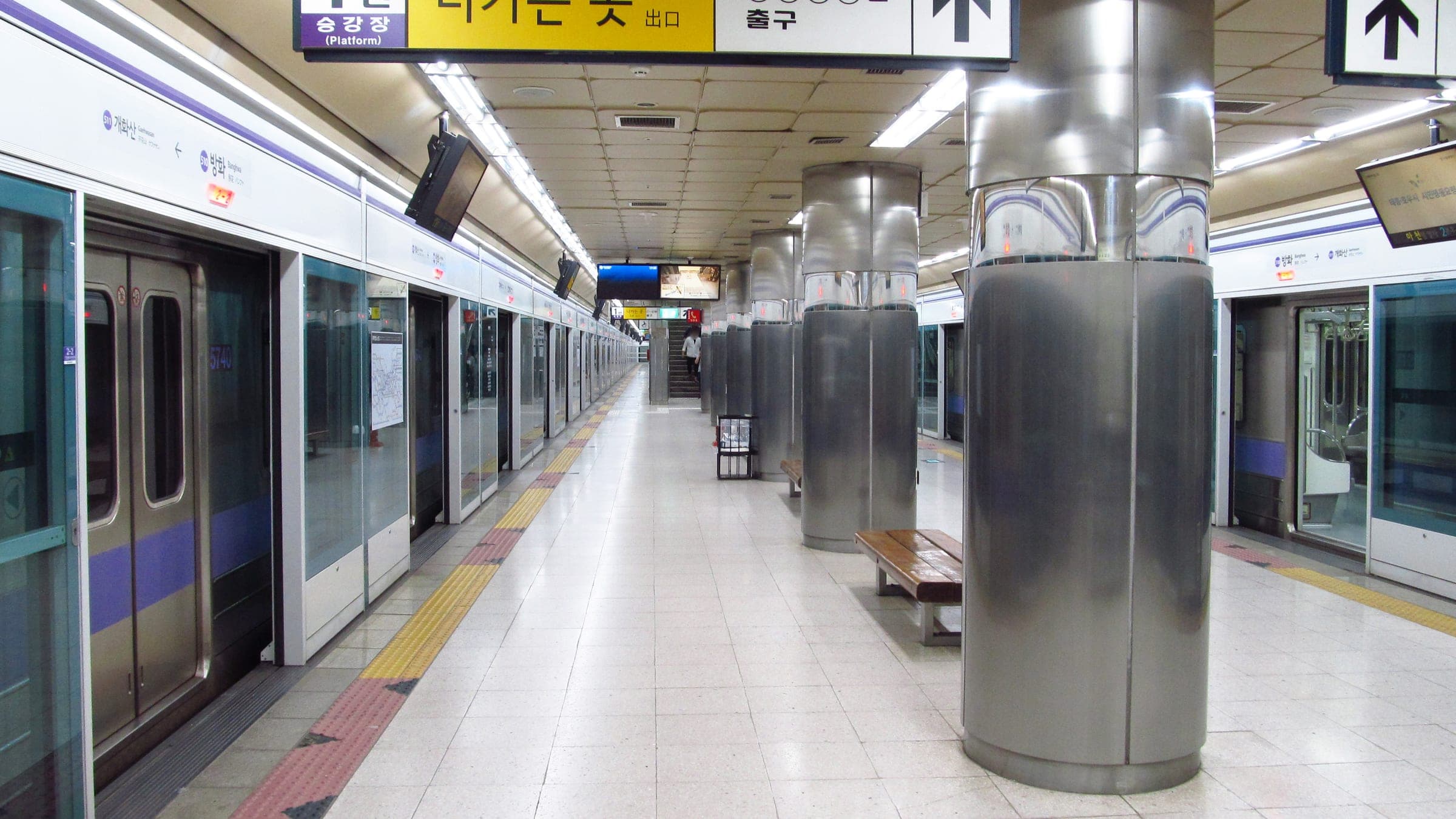
What does a single ride cost?
1,550 won on a transit card, or 1,650 won for a single-journey ticket. That base fare covers the first stretch of a journey and longer rides add to it by distance, so most trips inside the city stay close to the base.
Single-journey tickets are no longer cash only. Since 17 March 2026, 440 machines at 273 stations on Lines 1 to 8 sell them, and Climate Card passes, to Visa and Mastercard holders, with an average service fee of about 3.7%. Everything else about paying in Korea is in how to pay in Korea.
The fare rose from 1,400 won on 28 June 2025 and applies across Seoul, Incheon and Gyeonggi Province, which is to say most of the capital region behaves as one fare area.
Why do so many guides say 1,400 won?
Because they have not been checked since the increase. This is the most common out-of-date figure in English-language Seoul advice, and it is worth treating as a test rather than an annoyance: a page still quoting 1,400 won has not been revisited since mid-2025, so its opening hours and ticket prices deserve the same suspicion.
Even official pages are not automatically safe. Seoul's city government page carries the current 1,550 won. Seoul's English tourism site was still showing 1,400 won when we checked on 12 September 2026. Being official and being current are different properties.
The transfer rule is where the money is
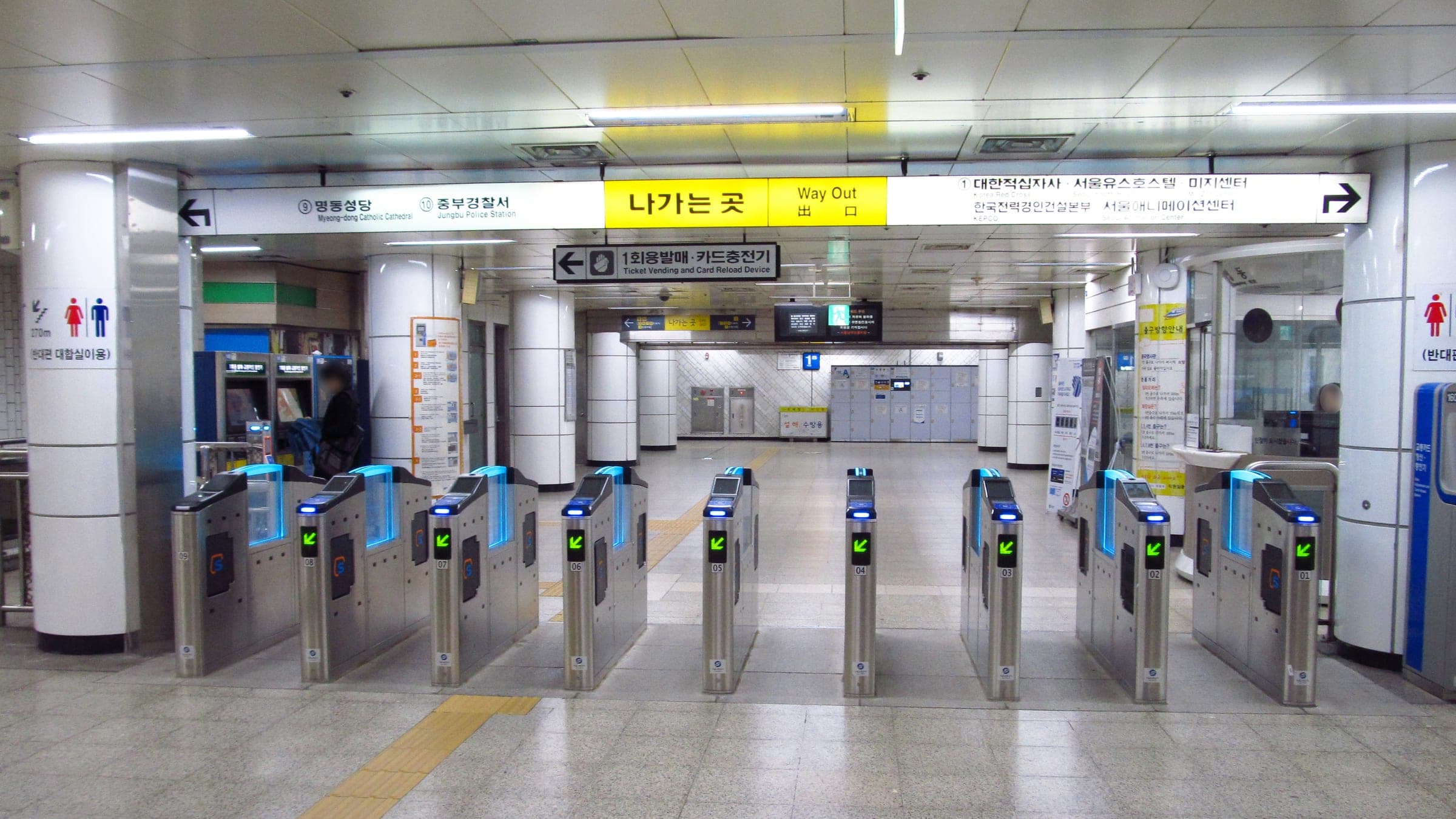
The base fare is not what decides your daily spend. The transfer window is.
Change between subway and bus, or bus and bus, within 30 minutes of tapping out, and the whole journey stays on one integrated fare instead of starting a second one. Between 9pm and 7am that window extends to 60 minutes. Both figures come from the Seoul Metropolitan Government.
That single rule turns a subway-then-bus trip from two fares into one, and it applies automatically as long as you tap out and tap in with the same card. Riding on a single-journey ticket gives up the transfer entirely, which is the real reason a card beats cash rather than the 100 won difference on the base fare.
Two habits follow. Tap out even when a gate seems optional, because the clock starts at the tap. And when you are choosing between waiting for a bus and walking twenty minutes, remember the walk may cost you the transfer.
Does the card work outside Seoul?
Yes, and this is where people buy a card they do not need. A transit card bought in Seoul works on Busan's subway and buses as well, so there is no need for a second one when you take the KTX south.
What does change is the price. Busan sets its own fares through Busan Transportation Corporation: 1,600 won for one section, meaning the first 10km, and 1,800 won beyond that. The card is national. The fares are municipal. A guide that quotes Seoul's 1,550 won for Busan has assumed otherwise.
What to do on arrival
Buy a transit card, load it, and stop thinking about individual fares. The card removes the cash penalty, unlocks the transfer window and travels with you to other cities, which is most of the decision made in one purchase.
The entry paperwork is a separate question and worth settling before you fly: K-ETA or e-Arrival Card covers which form applies. For the city itself, start at the Seoul travel guide.
Frequently asked questions
How much is a Seoul subway ride?
1,550 won on a transit card, 1,650 won for a single-journey ticket. The base fare covers the first stretch of the journey and longer rides add to it by distance. It rose from 1,400 won on 28 June 2025 across Seoul, Incheon and Gyeonggi Province.
How long do you have to transfer for free in Seoul?
30 minutes from tapping out to tapping in, extended to 60 minutes between 9pm and 7am, according to the Seoul Metropolitan Government. Within that window a subway-to-bus or bus-to-bus change stays on one integrated fare instead of starting a new one.
Why do guides disagree about the Seoul subway fare?
Because the fare changed on 28 June 2025 and many pages have not been updated since. A page quoting 1,400 won is describing the old fare, not a cheaper ticket, and it is a fair signal to check the rest of its figures.
Does the same card work outside Seoul?
Yes. A transit card bought in Seoul works on Busan's subway and buses too, though Busan sets its own fares: 1,600 won for one section and 1,800 for two. The card is national; the fares are not.
Sources
- Climate Cards and Single-Journey Transit Tickets Now Accepting International Credit Cards (Seoul Metropolitan Government), checked Sep 13, 2026
- Subway: fares and transfers (Seoul Metropolitan Government), checked Sep 12, 2026
- Subway base fares in Seoul, nearby areas rise by 150 won (The Korea Herald), checked Sep 12, 2026
- Urban rail fare guide (Busan Transportation Corporation), checked Sep 12, 2026
Image credits
- Platform screen doors are standard across the Seoul network: LERK (CC BY-SA 4.0)
- Ticket gates at Myeongdong station: LERK (CC BY-SA 4.0)
Related guides
DMZ Tours from Seoul: What You Can Actually Visit
The DMZ can only be visited on a guided tour, and the JSA at Panmunjom has been shut to the public since December 2023. What that means for what you book.
Updated Sep 12, 2026
Where to Stay in Seoul: Choosing an Area, Not a Hotel
Seoul is large and its sights are scattered, so the neighbourhood decides your trip more than the hotel does. What each main area is good and bad at.
Updated Sep 12, 2026
How to Pay in Korea: Cards, Cash and Transit
Foreign cards work in most Korean shops. They fail at market stalls, on Korean websites and at the subway gate, and each of those gaps has its own workaround.
Updated Sep 13, 2026
K-ETA or e-Arrival Card: Which One Do You Actually Need?
Most visitors to South Korea are exempt from the K-ETA, and that exemption is exactly what makes the e-Arrival Card mandatory for them instead.
Updated Sep 12, 2026