Planning
How to Pay in Korea: Cards, Cash and Transit
Updated · Fact-checked · By AsiaPicks Editorial Team
Short answer
A foreign Visa or Mastercard pays for most things in Korea. Cash is still needed at traditional markets and street stalls, and for loading a standard T-money card. You cannot tap a foreign card at a Seoul subway gate until the city replaces the gate terminals, scheduled for 2027.
| Where you are paying | Foreign card | Cash | Transit card |
|---|---|---|---|
| Shops, hotels, department stores | Yes, at most | Yes | – |
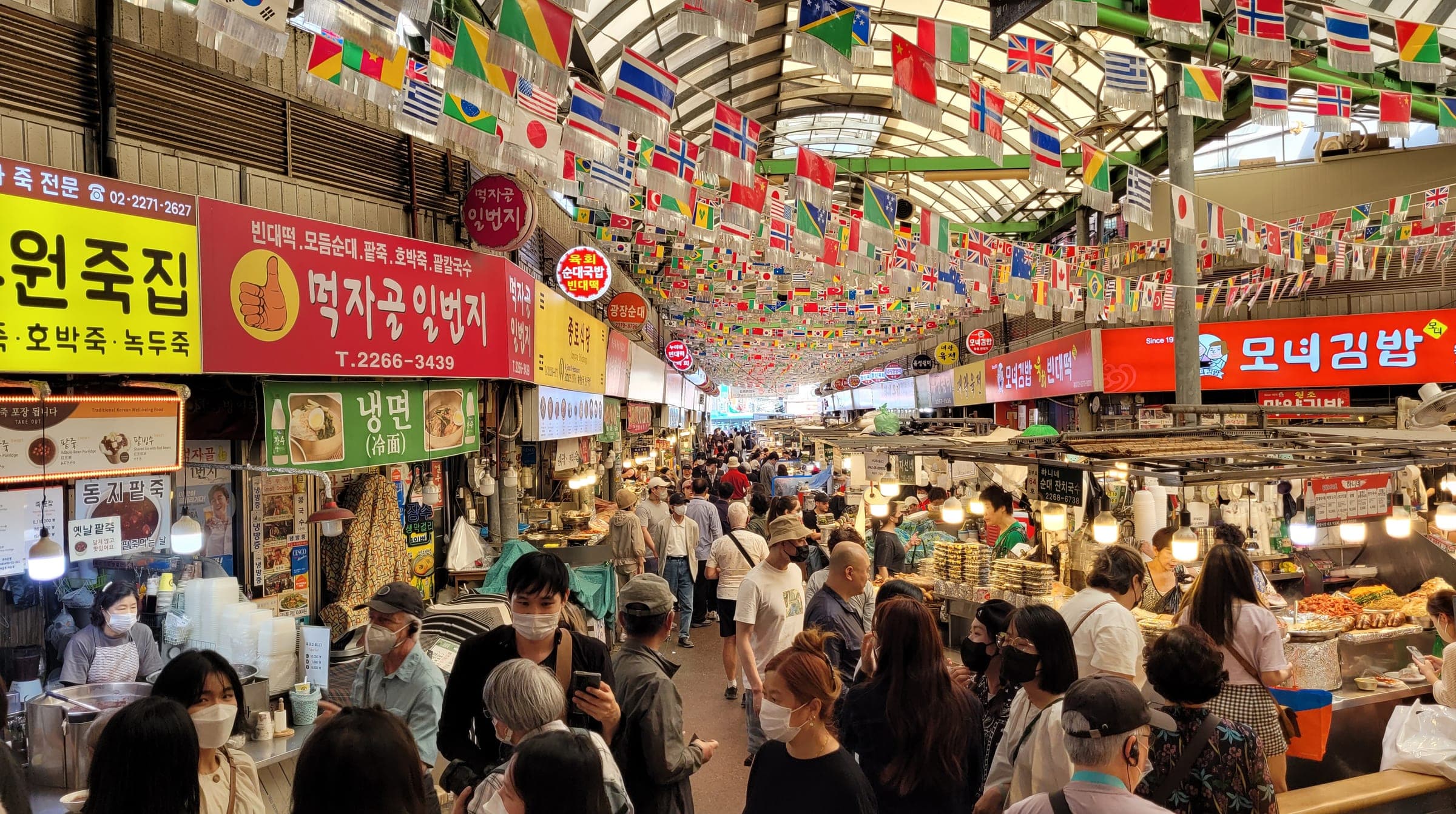
| Traditional markets, street stalls | Not always | Yes | – |
| Subway gate | Not until 2027 | – | Yes |
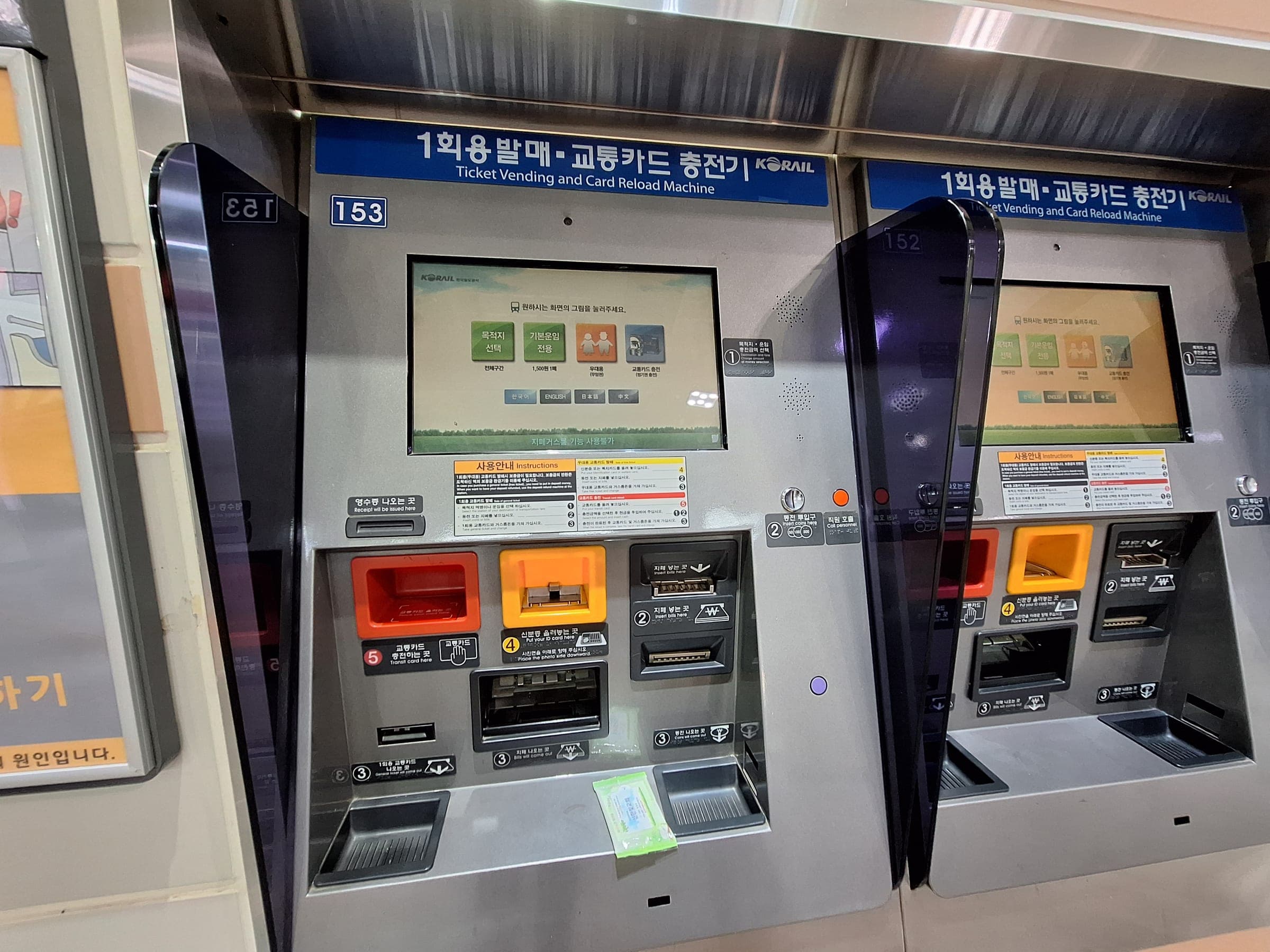
| Station ticket machines (passes, single tickets) | Yes since March 2026, about 3.7% fee | Yes | – |
| Topping up a physical T-money card | No | Yes | – |
| Taxis | Credit cards accepted; the K.ride app takes foreign cards | Yes | Yes |
| Korean websites and apps | Often refused | – | – |
Can you use a foreign credit card in Korea?
Yes, in most shops. The Korea Tourism Organization says most Korean stores accept Visa, Mastercard, JCB, Amex and UnionPay with no purchase limit.
Acceptance is not the same as success. The Korea Times reported in April 2025 that payments with cards issued outside Korea sometimes fail even at stores that say they take most cards. Our pick is to carry two cards on different networks, so a declined Visa can be followed by a Mastercard rather than a trip to find cash.
Where do foreign cards stop working?
Online, more than in person. Korean websites and apps often ask for identity verification that a foreign card or phone number cannot pass. A May 2026 Korea JoongAng Daily report on a Yanolja study found that sign-up and authentication for online payments made up 13.1% of foreign travellers' complaints, and two travellers from New Zealand quoted in the report could not book cinema tickets without a Korean card or bank account.
The practical rule is to expect friction on anything booked through a Korean-language app, and to buy in person or through an English booking site when a Korean one refuses your card.
Where do you still need cash?
At traditional markets, street stalls and transit card top-ups. The Korea Tourism Organization advises carrying petty cash because traditional markets and street shops may accept cash only. The Korea Times reported in June 2026 that a government push to improve historic markets sets card acceptance as a basic standard, which is a target rather than a guarantee for any single stall.
The other place is the transit card. Seoul Metropolitan Government said in October 2025 that foreign visitors had to buy and reload transit cards with cash, because overseas cards did not work in the transit payment system. The card-accepting machines added since March 2026 sell passes and single tickets. The city's announcement does not say they reload a standard T-money card, so plan on topping up with cash at a convenience store or station machine.
Can you tap your credit card on the subway?
Not at the gate yet. Seoul's plan fits EMV terminals on buses first and replaces the gate terminals on subway Lines 1 to 8 in 2027, with town buses and private railways following between 2028 and 2030. Until then, a ride needs a transit card, a pass or a single-journey ticket.
A foreign card can now buy those. Since 17 March 2026, 440 ticket machines at 273 stations on Lines 1 to 8 sell Climate Card passes (1, 2, 3, 5 and 7 days) and single-journey tickets to Visa and Mastercard holders, as well as Kakao Pay and Naver Pay users. Seoul says an average service fee of about 3.7% applies. What a ride costs once you are through the gate is covered in the Seoul subway fares guide.
Do phone wallets and Korean payment apps work?
Some do, and none replaces a physical card. The Korea Times put NFC terminal adoption at around 10% of merchants in March 2025, which is why Apple Pay has struggled to become a way to pay across Korea.
Chinese and regional wallets do better. The Korea Tourism Organization says Alipay, WeChat Pay and UnionPay are accepted at ZeroPay member stores. Korean apps are moving. The May 2026 Korea JoongAng Daily report said neither Kakao Pay nor Naver Pay supported foreign tourist accounts. Weeks later, on 4 June 2026, Naver opened passport verification to foreign users, which unlocks booking, ordering and payment through Naver Map without a Korean phone number. Kakao Pay has announced no equivalent.
How do you pay for a taxi?
By card, cash or transit card. Seoul Metropolitan Government says taxi fares can be paid in cash or by credit card, and a public transportation card works for taxis as well as the subway and buses.
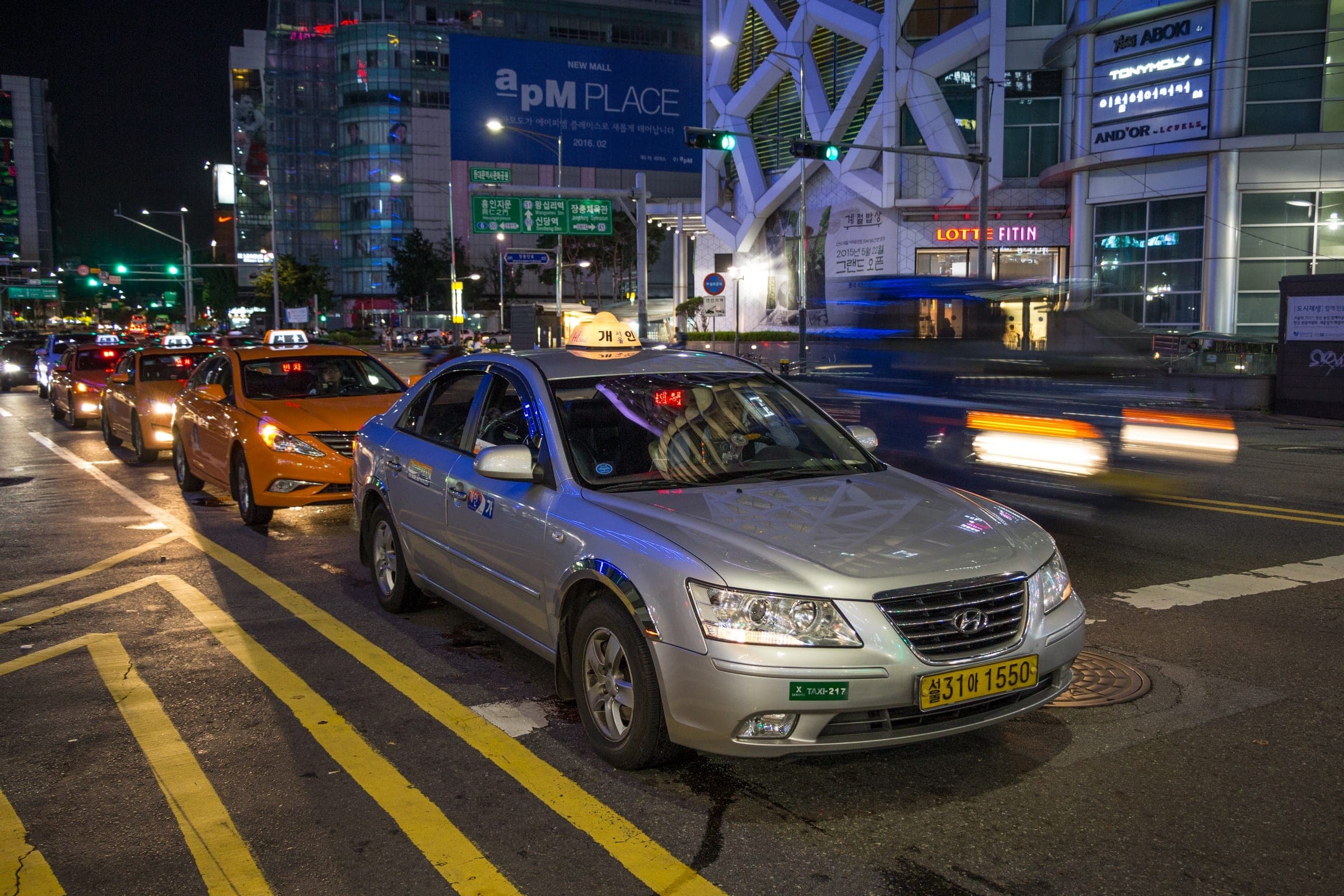
To book rather than hail, Kakao Mobility's K.ride app was built for foreign visitors. According to the Korea Herald, it launched on 4 June 2024, accepts sign-up with a Google or Apple account, and takes credit and debit cards issued outside Korea.
Can you get the tax back on shopping?
Yes, often at the till. At participating stores the tax is taken off the price when you pay, provided each purchase is at least 15,000 won and under 1 million won, and your purchases add up to no more than 5 million won in total. Goods must leave Korea within three months.
Those limits were raised on 1 January 2024, so a guide quoting lower caps is out of date.
Should you pay in won or in your home currency?
In won. When a card terminal offers to charge you in your home currency, decline and pick won. American Express advises that paying in the local currency is usually the better option, particularly on a card with no foreign transaction fee.
Do you tip in Korea?
No. The Korea Tourism Organization says tipping is not required or expected, and asking for more water or side dishes does not add to the bill.
What to carry
Two cards on different networks, enough won for a market and a transit card top-up, and a transit card loaded on the first day. Before any of that, the entry paperwork comes first: the K-ETA and e-Arrival Card guide explains which form you need, and the South Korea travel guide covers the rest of the planning.
Frequently asked questions
Can I use my credit card in Korea?
Yes, in most shops. The Korea Tourism Organization says most stores take Visa, Mastercard, JCB, Amex and UnionPay with no purchase limit. Foreign-issued cards do sometimes fail at terminals that accept cards, so carry a second card on a different network.
Do I need cash in Korea?
A small amount. Traditional markets and street shops may accept cash only, and a standard T-money transit card is loaded with cash at convenience stores and station machines.
Can I tap my credit card on the Seoul subway?
Not at the gate yet. Seoul plans to replace the terminals on subway Lines 1 to 8 in 2027. Since 17 March 2026, 440 ticket machines at 273 stations sell Climate Card passes and single-journey tickets to Visa and Mastercard holders, with an average fee of about 3.7%.
Do you tip in Korea?
No. The Korea Tourism Organization says tipping is not required or expected, and extra water or side dishes do not cost more.
Related guides
Seoul Subway Fares and Transfers: What a Ride Actually Costs
What a Seoul subway ride costs on a transit card, why so many guides still quote an old fare, and the transfer rule that decides what you actually pay in a day.
Updated Sep 13, 2026
K-ETA or e-Arrival Card: Which One Do You Actually Need?
Most visitors to South Korea are exempt from the K-ETA, and that exemption is exactly what makes the e-Arrival Card mandatory for them instead.
Updated Sep 12, 2026

Where to Stay in Seoul: Choosing an Area, Not a Hotel
Seoul is large and its sights are scattered, so the neighbourhood decides your trip more than the hotel does. What each main area is good and bad at.
Updated Sep 12, 2026
Where to Stay in Busan: The Beach or the Interchange
Busan runs along the coast rather than around a centre, so the area you pick decides your travel time and, unlike Seoul, your subway fare as well.
Updated Sep 12, 2026
Sources (16) and image credits
Sources
- Shopping in Korea (Korea Tourism Organization), checked Sep 13, 2026
- Why Korea's payment systems leave tourists frustrated (The Korea Times), checked Sep 13, 2026
- Declined cards, reservation hassles: digital barriers still undermine the Korea travel experience (Korea JoongAng Daily), checked Sep 13, 2026
- Seoul Implements Open-Loop Payments for International Tourists (Seoul Metropolitan Government), checked Sep 13, 2026
- Climate Cards and Single-Journey Transit Tickets Now Accepting International Credit Cards (Seoul Metropolitan Government), checked Sep 13, 2026
- Transit card purchase and reload for foreign visitors (Korean) (Seoul Metropolitan Government), checked Sep 13, 2026
- Korea pushes to make historic street markets more user-friendly (The Korea Times), checked Sep 13, 2026
- Seoul to allow use of foreign credit cards on buses, subway by 2030 (The Korea Times), checked Sep 13, 2026
- Passport Verification for foreign users (NAVER), checked Sep 13, 2026
- Two years in, Apple Pay struggles to gain foothold in Korea (The Korea Times), checked Sep 13, 2026
- Taxi (Seoul Metropolitan Government), checked Sep 13, 2026
- Kakao Mobility launches K.ride for foreign visitors (The Korea Herald), checked Sep 13, 2026
- Comprehensive Tax Refund Guide (Korea Tourism Organization), checked Sep 13, 2026
- Tax refund limits for foreign tourists raised (The Korea Herald), checked Sep 13, 2026
- Should you pay in local or home currency when traveling? (American Express), checked Sep 13, 2026
- About Korean Food (Korea Tourism Organization), checked Sep 13, 2026
Image credits
- Gwangjang Market, Seoul: Bgag (CC0)
- Ticket vending and card reload machines, Seoul subway: LandAndTree (CC BY 4.0)
- Taxis in central Seoul: Ilya Plekhanov (CC BY-SA 4.0)
- Platform screen doors are standard across the Seoul network: LERK (CC BY-SA 4.0)
- Arrival hall, Incheon Airport Terminal 2: AirportTerminalGuy (CC BY 4.0)
- Bukchon-ro 11-gil in Bukchon Hanok Village: Basile Morin (CC BY-SA 4.0)
- Haeundae Beach: StephNurnberg (CC BY 2.0)